Did you know?
We understand — sometimes the work had to get done and you had no choice. But unpermitted work carries risks most owners never hear about until it is too late.
What is behind the walls is invisible. Garage conversions and inside work hide from view — and work done without a permit was never inspected. Bad electrical or other hidden problems can sit there unknown to you, and to whoever owns the home after you.
Insurance may not protect you. If a fire or accident is tied to unpermitted work, your insurance company can refuse to cover it — and you are personally liable for the damage, to your own property and to your neighbors'.
It surfaces when you sell. California law requires you to disclose unpermitted work when you sell or transfer the property — it comes out at the worst possible moment.
Commercial buildings carry the same risk. Owners, agents, and property managers hold the same exposure. Unpermitted work is not a game of roulette worth playing.
The fix is straightforward. Legalizing ends the exposure: an inspector checks the work, you make any changes needed, and you hold the permits in hand.
PermitsPros can help you — here are the easy stepsIt happens right here in San Jose
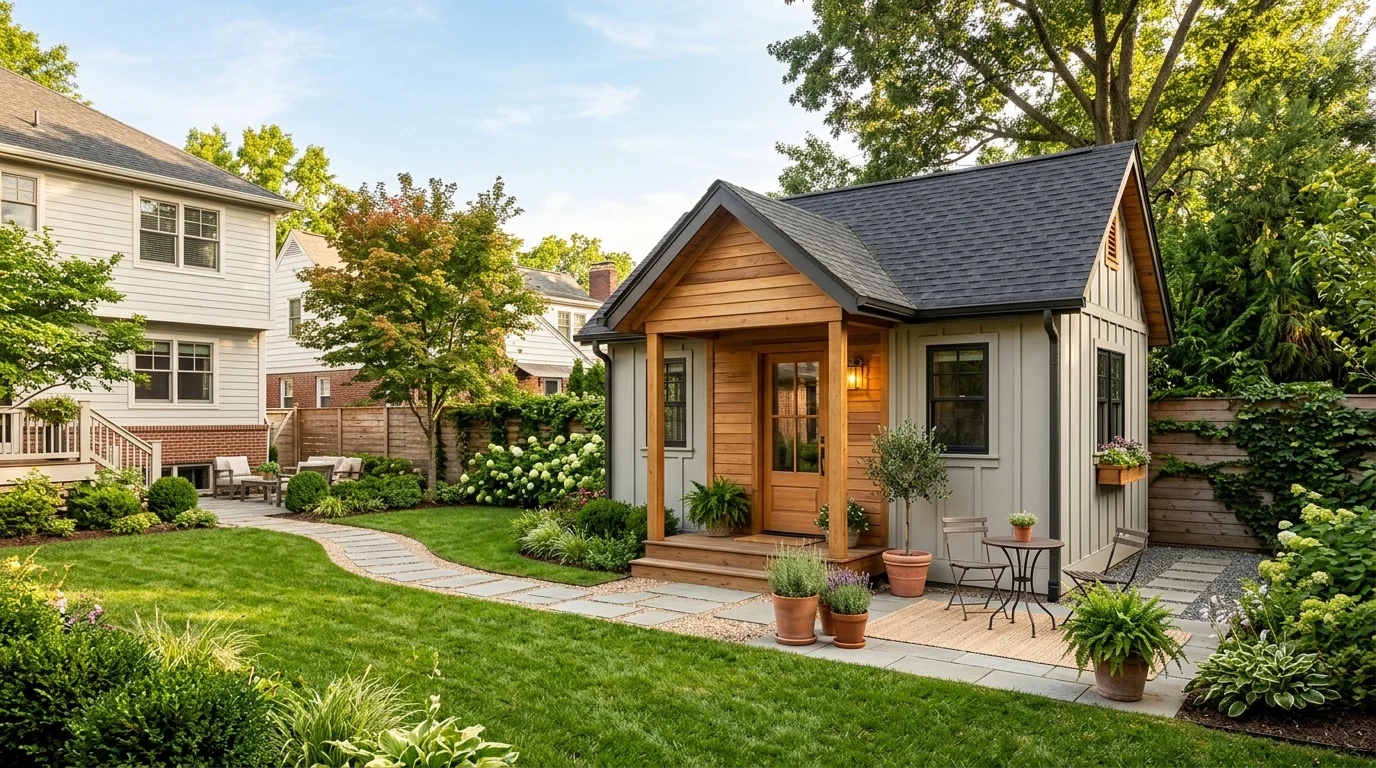
Florida Avenue, San Jose — 2024
A landlord rented out an illegal unit with defective electrical wiring and no smoke or carbon monoxide detectors. A city inspector showed up and issued violations — then her own tenants sued her in Superior Court. The unit wasn't the problem. The missing permits were.
Santa Clara County Superior Court filing, 2024.
The garage conversion that ate the deal — San Jose, 2026
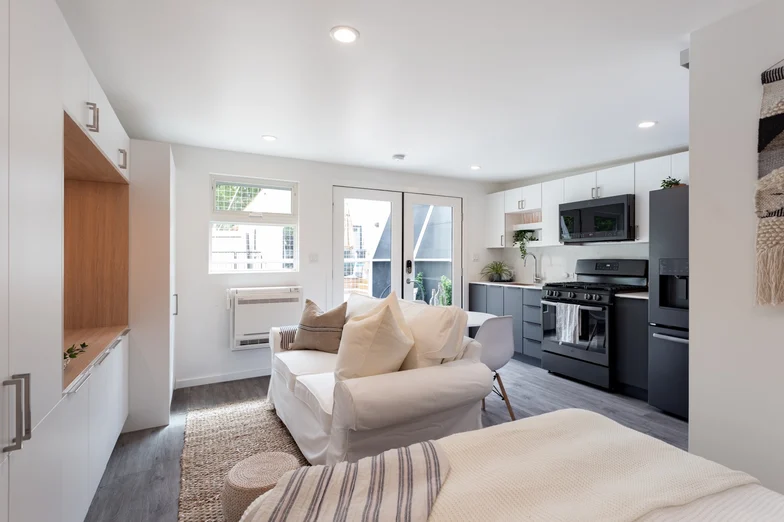
A first-time buyer closed on a San Jose home with a finished, rented garage conversion — then the city told him it had no permits, no inspections, no approvals at all. The tenant had full legal rights and couldn't simply be moved out. Months of legalizing followed, and it cost him far more than the deal was worth. He didn't buy a bonus unit. He bought a violation.
A San Jose buyer's story, reported 2026.
The city is ready to help you legalize
Don't take our word for it — here is the City of San José describing its own program:
"A State program that gives San José homeowners a clear, penalty-free path to legalize an unpermitted accessory dwelling unit or junior accessory dwelling unit built or converted before January 1, 2020."
"This is a safety-focused review, not a full building code compliance check. Only corrections identified by the City inspector are required. Once corrections pass final inspection, your unit is legalized."
— City of San José, AB 2533 ADU & JADU Legalization Program
The city even staffed a team for this — it is called the ADU Ally Team ([email protected]). City Hall built the door and put people behind it.
That's not us saying it — that's City Hall. PermitsPros just walks you through the door.
Here are the easy steps
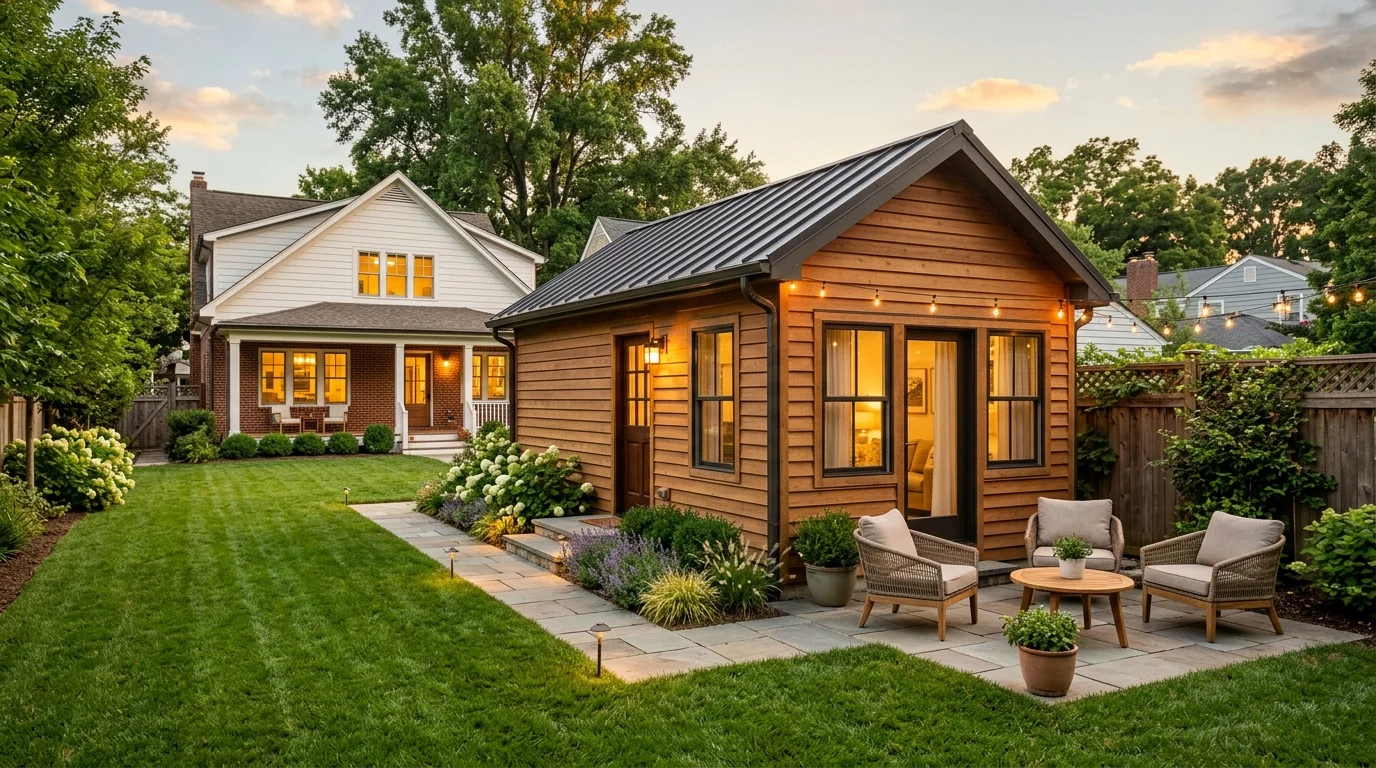
- Tell us what you built. Talk to Tony or email us. Free and confidential — the city hears nothing yet.
- Private check first. A licensed inspector looks at your unit confidentially, so you know where you stand before anything is filed.
- We build your package. Proof your unit existed before 2020, simple plans (we draw them if you have none), and the city's safety checklist.
- We file it and walk it through. We submit to the city's ADU Ally team, handle any safety fixes, and get you to the final inspection. Your unit comes out legal.
The good news, in plain language
San Jose's AB 2533 ADU and JADU Legalization Program exists for exactly your situation. Here is what the law says:
- No penalties or fines for having built the unit without a permit.
- No impact fees and no connection fees — the charges that usually make legalizing expensive are waived.
- The city must approve your legalization unless the unit has a substandard, unsafe condition. Corrections are limited to health and safety — nothing else.
- Your unit is judged on health and safety, not on whether it matches every current rule.
- A private first look is available: before you apply, you can have a licensed third party inspect your unit confidentially, so you know exactly where you stand before the city sees anything.
One honest line: the city's standard permit and inspection fees still apply — it is the penalties and extra fees that are waived.
How it works
- Talk to Tony. Tell him about the unit — when it was built or converted, and what it is. Two minutes.
- We build your package. Proof the unit existed before January 1, 2020 — utility records, leases, or tax records all work — plus floor and site plans and the city's safety checklist. No plans? We draw them.
- We file for you. The application starts by email to the city's ADU Ally team ([email protected]), and we run it from there — responses, corrections, and scheduling included.
- The city reviews health and safety, then a final inspection — and your ADU is legal. The city says a complete application typically takes 4 to 6 months.
What you will need
- Proof the unit was there before January 1, 2020 — an old utility bill, a lease, tax records, or similar paperwork
- Floor plans and a site plan of the unit — if none exist, we prepare them for you
- The city's safety checklist, completed for the unit
- If you want it, the confidential private inspection first — your call, always
That is the whole list. Gathering it is our job, not yours.
Built after 2020, or a different kind of work?
The AB 2533 forgiveness terms cover ADUs and JADUs built or converted before January 1, 2020. Units built after that date — and other unpermitted work — follow a different path. Talk to us and we will map it for you, honestly and in plain language.
Here's what happens inside the portal
Panel change, ADU, garage conversion, addition — if it was built without a permit, the path is the same. Here is the whole trip, start to finish:
1You tap Tony

Are you applying as owner or contractor?
Tap Tony and talk — he asks the questions and shows you, in detail, what your project needs. Two minutes, no forms to wrestle.
2Tony shows you your package
Tony lays out the whole package to legalize your project:
- Proof your unit existed before 2020
- As-built plans — drawn for you if you have none
- The city's safety checklist
- The application — filed for you
Nothing hidden, nothing extra. You see the full list before anything starts.
3You pay
One simple checkout inside the portal — then we go to work: the package, the filing, the city's responses, the inspections.
4Your green folder fills
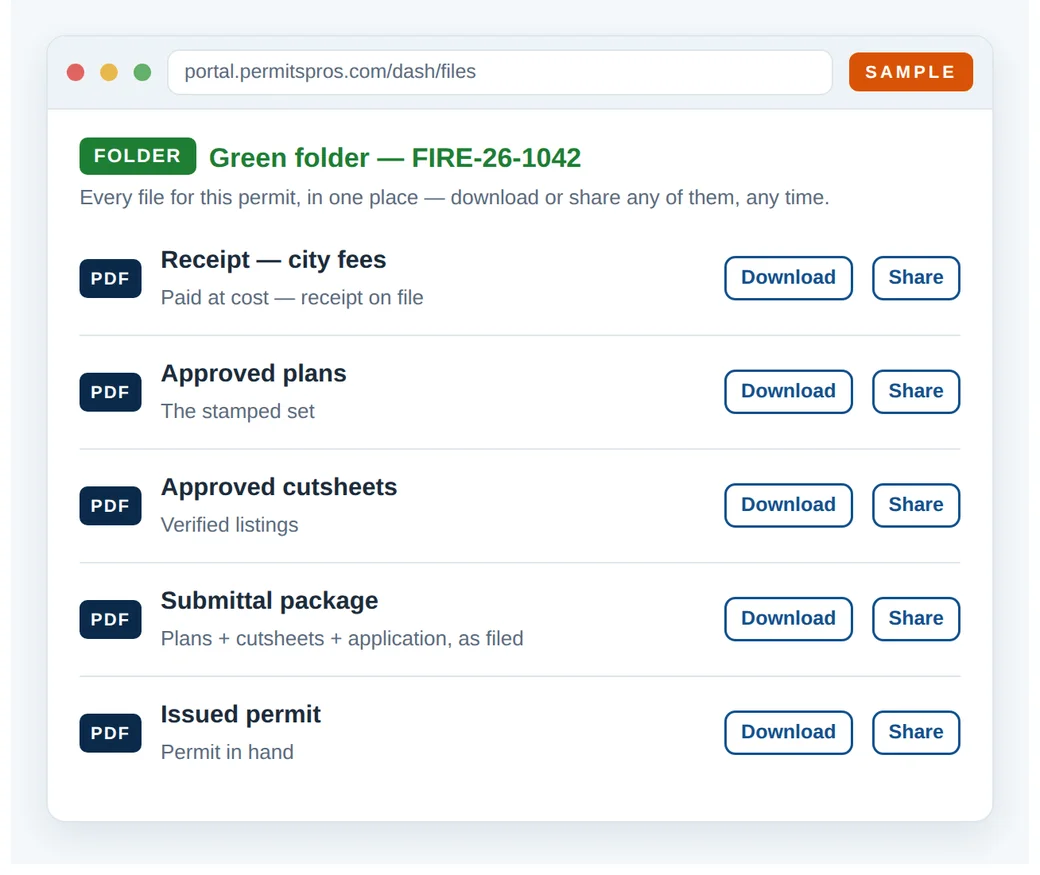
From illegal to legal — your paperwork lives in your green folder. Your legal folder: plans, application, receipts, and the issued permit, all in one place.
Project Complete
Your ADU can be legal. We will run it.
Legalizing is the same simple motion as running a permit — and running permits is all we do. Start with a two-minute talk, or send Tony an email and we will take it from there.