The permit, first
Access control in San Francisco is permitted work. A standalone system rides a DBI electrical permit — Category 5, "Security Systems" — a category the city's own fee schedule defines as including "installations and devices that interface with life safety systems." One permit covers a structure, a tenant space, or a commercial office floor. (The category excludes installations in single-family homes.)
Since September 14, 2026, these permits are online-only through PermitSF — San Francisco's OpenGov portal. Paper applications are no longer accepted, and the old Permit Tracking System route is closed for these permits.
A fire alarm permit is a separate application type, and it applies when the scope is fire alarm work itself. Tying mag-locks into the fire alarm so they release on alarm does not by itself convert the job into a fire alarm permit — the fee schedule places life-safety-interfacing devices inside the Category 5 security line.
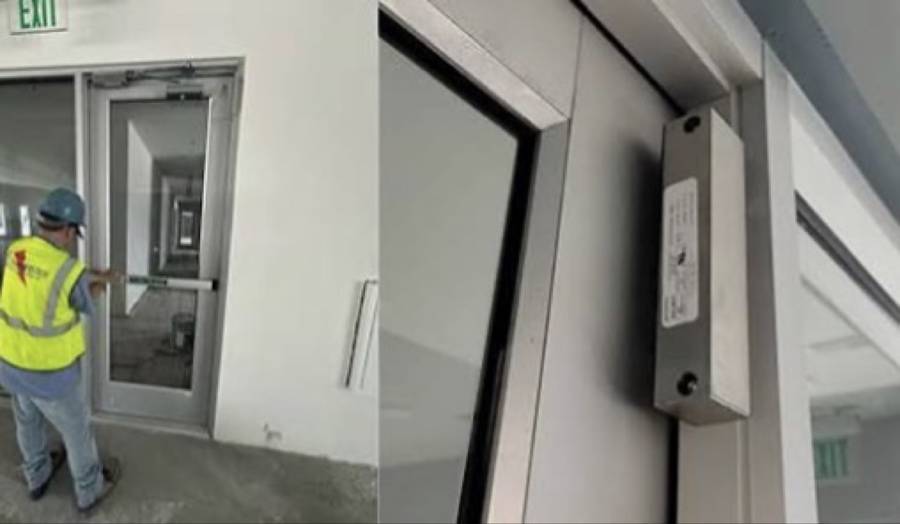
In practice: mag-locks on egress doors that must release on the fire alarm run as a coordinated SFFD fire plan check + DBI review — that is how the city's own process handled our reference job (issued October 2026), with an SFFD final test as the close-out. Plans and cutsheets are the submittal currency, and the permit record lives with DBI, which issues the job card.
Sensor-release doors SFBC 1010.2.11
The most common configuration: a lock held by a sensor on the egress side. Every item below must hold — this is the checklist the review and the final test run against.
The compliant door, drawn
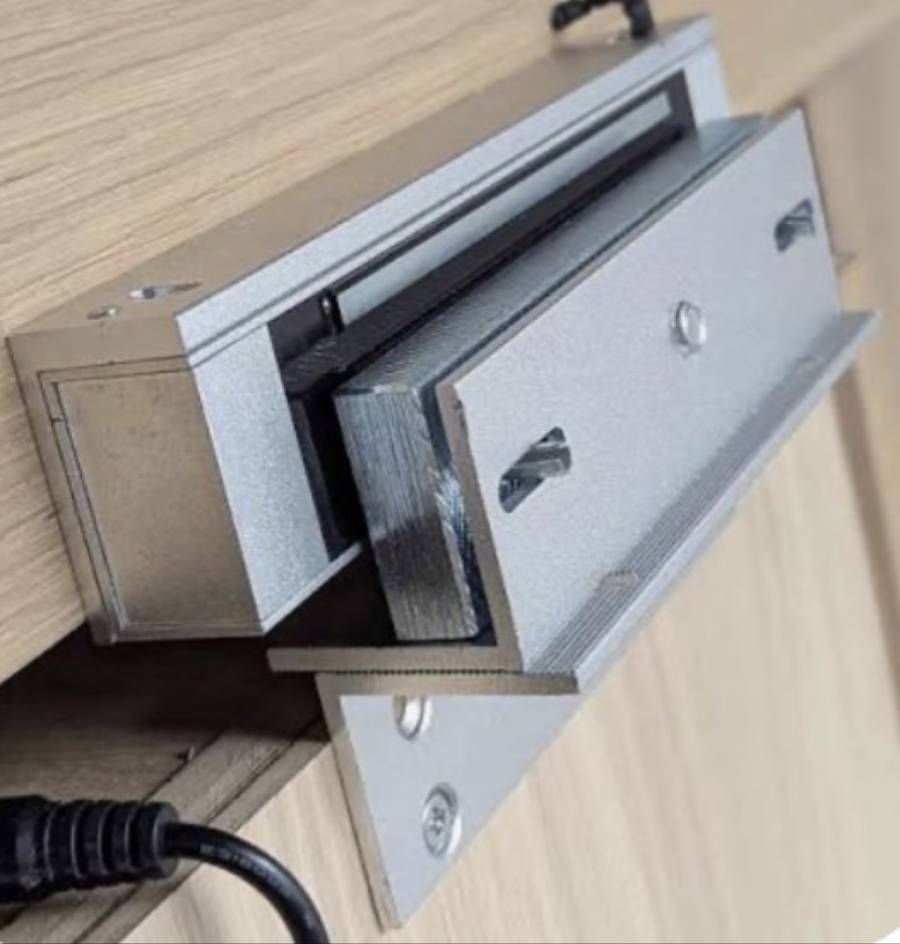
- 1Mag-lock — fail-safe. Loss of power to the lock unlocks the door.
- 2Egress-side motion sensor. Detects an approaching occupant and unlocks the door.
- 3PUSH TO EXIT button. 40–48 inches above the floor, within 5 feet of the door; unlocks for at least 30 seconds.
- 4Fire alarm tie-in. Unlocks on alarm and stays unlocked until the system resets.
- 5Listed hardware. Locking device listed to UL 294 or UL 1034.
Hardware-release doors SFBC 1010.2.10
Electrified locksets with a built-in release follow the companion rule:
Delayed egress SFBC 1010.2
The configuration reviewers scrutinize hardest. A delayed-egress lock holds the door briefly after it is pushed — and the code allows it only under conditions:
High-rise elevator lobbies SFBC 1010.2.11.1
San Francisco's own rule. Where occupants are not required to egress through the lobby, access-controlled lobby and tenant doors in high-rise office buildings are allowed only when approved by the fire chief — with all of the following:
Who may pull the permit
A C-7 Low Voltage license covers the access control system itself — the classification's scope names access control systems expressly. What it does not cover is fire alarm work: low-voltage fire alarm systems are specifically outside the C-7 scope. Anything crossing into fire alarms — and electrical work generally — is C-10 territory.
The installer must be registered with the City and set up in PermitSF before filing.
What the city charges SFBC TABLE 1A-E
The city's published electrical permit fee schedule, current since July 12, 2026 (Ord. 112-26):
| Item | City fee |
|---|---|
| Security Systems permit — 10 components or less | $320 |
| Each additional group of 10 components | +$52 |
| Witness testing (life safety / fire warning systems) | $519 / hour |
| Off-hours inspection | $555 / hour (2-hour minimum) |
| Re-inspection | $259 per half hour |
Worked examples from the same schedule: a system of about 25 components runs $424 in city fees; about 45 components, $528. City fees are the city's. PermitsPros passes them through at cost, with receipts — our service is the flat fee beside them, below.
The process, run for you
Intake
Send the drawings and hardware cutsheets (or just the drawings; we build the packet). Signed authorization + photo ID.
Plans & cutsheets
We check the set against SFBC 1010.2 before filing: sensor release, push-to-exit placement, fail-safe behavior, UL listings.
SFFD review
Fire plan check on the life-safety side, filed through PermitSF: the locks' release on alarm is the review.
DBI job card
The permit issues with the DBI job card; the card is the job's record on site.
Install
Your crew installs to the approved set; we track the record while you work.
Final test
The SFFD fire-alarm final test is scheduled and coordinated — included for San Francisco jobs — locks release on alarm, witnessed. Signed-off permit delivered.
One flat number per project, set by how many entries are controlled — quoted up front, never a meter. One corrections round included; additional rounds are $295 each, quoted in writing before we resubmit. City fees at cost, passed through with receipts.
| Entries (doors / openings) | Service fee |
|---|---|
| 1–9 entries | $495 |
| 10–24 entries | $795 |
| 25–49 entries | $1,195 |
| 50+ entries | $1,695 |
Optional: $195 plan code-review (before filing) · $195+ cutsheet packet built for you — the add-ons stay flat at every tier.
Why it matters
Failed finals
The final test is where an unreviewed install gets caught: the locks' behavior on alarm, on power loss, and at the push-to-exit button is exactly what gets witnessed.
Egress violations
A door that doesn't meet §1010.2 is a life-safety finding against the building — and the correction belongs to the owner.
Occupancy delays
Corrections run as resubmittals and re-tests on the city's schedule, not yours — a tenant improvement or a move-in waits on a door.
Installed properly per the fire code, none of this is your problem. That is the whole service.
Filed today. You never left the job.
Send the drawings and cutsheets — or just the drawings. We run the checklist, the filing, the review, and the final test.
Order the permit — $495/siteCheck my city — freeSources
San Francisco Building Code §1010.2 (electrically locked egress doors) and Table 1A-E, Electrical Permit Issuance and Inspection Fee Schedule (as amended by Ord. 112-26, effective July 12, 2026) · SFFD Administrative Bulletin 2.01, Fire Alarm and Signaling Systems Submittals · sf.gov PermitSF guidance (online electrical permits, September 14, 2026). Requirements summarized from the cited sources as of October 2026; the filed permit is reviewed against the code in force for the job.
PermitsPros Comm Inc · City of Concord Business License No. 5027635 · We file permits. We never promise approvals — that's the city's call, and we tell you so up front. Back to Access Control & Mag-Lock Permits.